junaidahmed captures life's important moments!


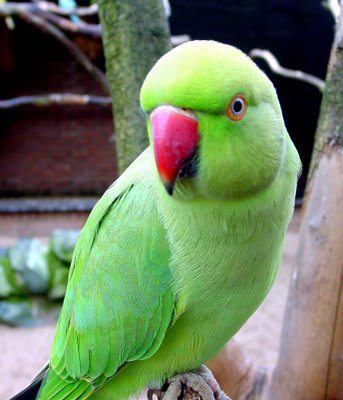
Indian Ringneck / Rose-Ringed Parakeet

The Rose-Ringed Parakeet or Indian Ringneck is classified as a smaller parrot known as a parakeet. These birds have a hooked beak, a long tail, and are smaller in size compared to most parrots. These parrots are about 16 inches in length and they have a stealthy appearance that sets them apart from most exotic birds.

Wild Indain Ringnecks are green with undertones of blue that can be seen during overcast days. These parrots have yellow feathers underling their wings and tail. Both males and females look very similar; however, the male has a black ring around his neck. His ring is highlighted with turquoise, pink, and blue. Although the female may not exhibit the impressive ring of the male, many Indian Ringneck enthusiasts will argue a slight green ring is visible.

Both sexes have large tails that are comprised of 12 feathers. The two largest tail feathers, which are blue, make up a large part of the parrot’s size. These elaborate tails can extend as much as 7 inches outward for the male and 6 inches outward for the female. Because these parrots are mostly green, they are very difficult to see during roosting or perching in trees. Most of the time, the presence of these parrots can be given away through their contact calls.

Indian Ringnecks are native to Asia and Africa and can be seen in the forests or arid environments. It’s not uncommon to see them thrive in urban areas as well. They have established colonies in environments which are not native to them, some major points of interest include California, Florida, and the UK. These birds are believed to cause major damage to crops; however, little evidence has been published to prove this accusation. Rose-Ringed Parakeets can be seen in rural areas feeding from birdfeeders or relaxing in parks.

Like most parrots, Indain Ringnecks are intelligent and DO make great pets. They learn concepts quickly and love to show off. Along with being intelligent, they are great at talking. Quaker Parakeets are known for


their talking ability but a ringneck can speak with clarity that is phenomenal. These birds are truly masters at talking for their size and can easily compete with quakers, greys, and amazons.

With that being said, I have decided to start an Indian Ringneck site that is devoted to these majestic parrots.

.

Indian Ringnecks As Pets


Indian Ringnecks in my opinion make excellent pets. They have stable personalities and can cope with minimal attention during busy times (does not mean they are content alone), and are great companions. These birds are stigmatized with a bad reputation of being impossible to keep. Avian breeders, who have had little experience with ringnecks, are usually quick to point out that ringnecks make horrible pets. This is untrue and I find that on the contrary they make marvelous pets. I believe not enough time and research has been invested into these parrots to make such a false statement. This bird is adored more for its mutations rather then its marvelous characteristics and pet qualities.

In general, IRNs (Indian Ringnecks) are not affectionate by nature.  During the breeding season, which will vary form location to location, IRNs become affectionate and demand it. They are not as affectionate as some well known other parrots; however, there are those that always break the rule. It is important to understand that parrots have personalities much like humans and every bird is an individual. Many times, while reading articles or watching IRNs around their owners I'll see just how affectionate they are. I then become delusional of the idea that ringnecks don’t like to be petted. Even though it's said ringnecks do not like being petted, they NEED and crave social interaction.

Ringnecks are marvelous talkers. They can talk very well and hearing them talk can be an enjoyment. Some ringnecks start talking around seven months, while most start around a year. They talk clearly and can easily be understood by strangers. These parrots can easily keep up with their larger cousins. Both males and females are able to talk; however, the male seems to be more gifted.

It should be said that buying a parrot for its talking ability is not a smart choice or is it ethical. Too many times people buy parrots on impulse and the species ability to mimic speech. This impulse buying is common and the result is devastating. The parrot, who did not meet the owner’s expectations, is subjected to a life of boredom and usually goes from house to house. As stated above, each bird is an individual and some will not talk. Parrots should be purchased for their company rather then their talking ability.

Along with their ability to mimic speech rather well, the Indian Ringneck is an avid learner. These parrots pick up concepts extremely fast, along with tricks and behaviors. In Asia, these birds are used as performers to attract spectators as they pass by shops. These parrots love to be challenged mentally and look forward to mental stimulation.

Both males and females make excellent pets. Again, more myths plague this parrot when it comes to picking a pet Indian Ringneck. Males and females both make great pets. Some ringneck owners are told one sex is better than the other— this is nonsense. The parrot’s character and behavioral skills are learned at a young age and it really comes down to how well the parrot has been socialized to co-adapt with humans.

Ringnecks are known for their stable temperament and this makes them enjoyable to interact with. It’s believed that because ringnecks do not develop strong bonds towards other ringnecks, which is not true, they make lousy pets. The truth is both males and females will bond to their owners strongly. I find it more extreme in females than males. Females tend to guard their chosen person by chasing away intruders with lunging and biting. A female ringneck can be extremely loyal to her chosen person. Males just stay away from the people they do not like. Occasionally, I’ll come across an aggressive male who will not stand for another person or bird touching their chosen person.


These parrots make excellent pets and I hope you decide to bless yourself with an Indian Ringneck. Then you too can help to put to rest the many myths that surround these parrots.


Feeding Your Indian Ringneck or Asiatic Parrot

Ringnecks and Asiatic parrots are not picky eaters. Most ringnecks and Asiatic parrots will eagerly devour fruits and vegetables if they are given the chance. Only a few selected birds might refuse to eat alternative foods other than seeds. In my experience, if I ever did come across an Indian Ringneck who chose not to eat pellets, fruits, or vegetables--they were easily converted to a healthy diet in weeks. Asiatic parrots in particular seem to be birds that really enjoy trying different foods. My Indian Ringnecks have such an appetite that anything that is placed into their cage is quickly eaten up.

The Diet Of A Wild Ringneck

Wild ringnecks eat many things in their natural surroundings. These parrots enjoy fruits, blossoms, and seeds. Because of their need to eat fresh fruits many farmers around the world regard ringnecks as a serious pest. For example, it's not uncommon for south east Asian farmers to complain about these birds. More recently many farmers located in Bakersfield, California are starting to complain about crop damage due to feral ringnecks. There, they are said to feed off orchards and damage the fruits before they can be picked. A majority of these feral ringnecks are also supported and fed by enthusiasts by backyard birdfeeders.

In the wild these birds seek fresh samplings that can easily be devoured. If none are present, many will resort to dandelion leaves on the ground. Some ringnecks dine on an occasional insects for protein. These birds eat a variety of foods and noting is off limits if it's edible.


The Diet Of A Captive Ringneck

Feeding your ringneck does not need to be complicated. In fact, feeding them is quite enjoyable. These birds need a variety of fresh fruits, vegetables, seeds, and pellets to enjoy a long life.

Many ringneck owners will only provide seeds while others only provide pellets. I believe doing so limits the optimal nutritional value. Ringneck were designed to eat a variety of foods and providing only one type of food is boring, unnatural, and could cause major health problems down the road. Many owners swear by one product while others dismiss products. Finding a food can get complicated and it can be overwhelming if you don't know what to feed your ringneck. I like to keep things simple and feed a variety of everything.

When I first started breeding my Indian Ringnecks I was told never to use pellets that were artificially dyed. I can’t disagree with this statement more. I have been using a particular brand for a while and I have never run into problems with my bird’s health. I find this information to be misleading and no scientific evidence has been published to prove these accusations. My ringnecks are healthy and active and I attribute this to their diet. So finding a what works for you and your birds is the best answer here.


Seeds

Seeds should be included in a healthy Asiatic parrot diet. Seeds should not be removed because these birds naturally eat seeds in the wild. Breeders insisted that seeds were bad for their birds because many of the parrots that only ate seeds developed problems. Seeds alone are fatty and can cause serious complications and shorten the lifespan of your Asiatic parrot drastically. If however, they are given in moderation then they are perfectly safe and healthy.

Mixing Seeds & Pellets Together

I would not advise mixing pellets and seeds together. Indian Ringnecks are smart and will easily avoid eating the pellets if possible. It is much better to rotate between the two. I keep the seeds in for four days and the pellets in for three days. This gives my ringnecks the opportunity to really eat and benefit from each food. Giving only pellets can cause a nutrient overdose; giving pellets in moderation will avoid this. The key is moderation and substitution here.

Please note, if your ringneck does not eat pellets, then you have to slowly introduce them into the diet before they are switched with seeds. The ringneck will starve itself if it has not learned to eat pellets.


Fruits & Vegetables


Fruits need to be added to your Indian Ringneck’s diet as well. Apples are probably one of their favorite fruits. Watching them eat their apples is fascinating and it is obvious they enjoy the taste of it. They eagerly drink the juice and chew the flesh into a pulp. It is amazing how quickly a slice will disappear. Grapes also seem to be a favorite and are enjoyed. Be sure to include all kinds of fruits such as oranges, kiwis, pears, mangos, and melons. Spoiled or old fruit should never be given to your parrot. Fruits provide antioxidants and are very healthy.

Though fruit is probably their first choice of fresh foods, vegetables need to be included into their diet as well. I give my Indian Ringneck raw baby carrots. Archimedes, my pet Indian Ringneck, will munch on a baby carrot for hours. He holds the carrot in his hand and takes small bites. Leafy greens need to be included too. I just place the leaves whole into the cages. Most Indian Ringnecks will not hold them but will gently tear off chunks. Warm squashes such as pumpkin, zucchini, or banana squashes are enjoyed if they are cubed and boiled. Be creative and always offer vegetables to their diet.


Protein

You also need to feed your parrot items rich in protein. Too much protein is not good; however, a few chunks of cooked meat is ideal. I find that shredded turkey or chicken will do the trick. Once a week I offer some kind of protein item. Just be sure to remove it an hour after being placed into the cage. This will ensure it does not spoil.

Remember, feeding your Indian Ringneck does not have to be difficult. These parrots will eat anything you cook just be sure to avoid oils, salts,


and preservatives. If you cook, prepare vegetables and fruits while you make your meals. It will save you time and can be stored and given throughout the week. If you properly feed your Indian Ringneck you can expect him to live 20 or more years, some Asiatic parrots can reach their 30s

Indian Ringneck bluffing

You have just purchased your new Indian Ringneck and all is going well.  Within days or weeks after settling into its new environment, your playful sweet parrot has turned into a monster.  His eyes will pin (when the pupil constricts to a tiny dot) and you receive many nasty bites.  These bites seem relentless and you cannot seem to get them to stop, even approaching the cage might trigger your ringneck to get aggressive. 

You start to take the attacks personal, so you believe it is better to keep your parrot in his cage for awhile.  You sit and wonder why your new handfed Indian Rigneck is biting because you feel you have done everything for him.  Many questions run through your mind.  Have I done something wrong?  Does he hate me now? Is he going to be like this forever?  Feeling helpless and confused, you have no idea what to do next or why this happened.  Welcome to the topic of bluffing!

Indian Ringnecks go through a special stage after being weaned that may cause them to be aggressive.  This stage is natural and is a critical learning period for your Indian Ringneck. How you deal with this stage has a long lasting affect on your ringneck’s personality and will probably mold your ringneck for the rest of its life.  So why do ringneck’s bluff?

Thinking about this answer for many years, I have come to the conclusion that ringnecks bluff for a variety of reasons.  Firstly, the first culprit could be a surge of hormones.   During this period, ringnecks may receive hormones that trigger them to start to become somewhat independent.  Though no scientific evidence has proven this to be true, I believe something chemical inside the ringneck starts to change. These hormones alter their attitude so much, that most ringnecks cope through biting.  Most are edgy and try to bite for any reason.  I like to think of this bluffing stage as their toddler years.

Secondly, the most important reason is to learn how to survive independently.  A ringneck must learn to adapt and survive on its own without the aid of its parents.  I have noticed that during this bluffing stage, Indian Ringnecks are fearless.  They explore items without caution and are very careless.  I am convinced this stage helps them understand what is acceptable and what’s dangerous. 

Much like a toddler, who grabs at anything, ringnecks use their beak in this same manner.  It's their way of testing objects and learning about themselves, foods, and objects. 

Thirdly, it could be a  genetic trait helps them to avoid inbreeding (Indian Ringnecks are not monogamous).

Old literature points out that Indian Ringnecks went through this stage to test their limits with their owners, though this holds some truth, ringnecks, or any other parrot for that matter, I believe do not have pack mentalities like canines. I believe there is no alpha leader, instead Indian Ringnecks work together as one entity—known as a flock.  With the birds I have studied and seen, no Indian Ringneck leads the flock or is more dominant then the others.  They may get into quarrels, but they are quickly solved and the birds go about their business.  So how should bluffing be addressed?

Start by interacting with the bird like you would normally do.   This bluffing needs to be completely ignored.  If the bird bites do not make a fuss about it and completely ignore it.  Under no circumstances are you to yell or hit your bird during this stage -- or any other time.  Do not wobble your hand, do not spray the bird, or do not flick the beak.  Ringnecks do not understand this type of punishment.   If they are abused in this manner they become aggressive and fearful of humans.  You need to gradually let your ringneck know that biting is not tolerated and will get no reaction out of you.  At the same time, you need to be open to your ringneck’s needs and be understanding towards your bird’s attitude.  They need to feel confident enough to trust you and they need time to let these hormones subside. 

I have seen many ringnecks become biters during this stage because they were improperly dealt with.  Some owners resorted to abusive tactics in hopes their ringneck would learn that biting equals punishment.  Other owners choose not to deal with the bluffing, so they confined their parrot to a cage.  Yelling at your ringneck or telling him to stop also resulted in chronic biting.  In the ringneck’s eyes, any type of reaction given by you is a reward.  The best and effective way to deal with this is to ignore it.  Your voice should only be used to greet, praise, and coddle the bird—not for discipline.

Though some bites are predictable, some are not.  To minimize these bites keep a toy or something your ringneck finds fascinating.  Distract him as much as possible if you believe your ringneck is extra edgy or moody for that particular sitting.  If your ringneck does choose to bite and will not let go, gently blow on its beak and ignore the fact you got bit.  Do this until the bluffing has passed.

 Remember to hang in there.  Though it might seem like your ringneck will never stop biting, stay consistent and ignore any aggressive behavior.  Avoid letting your parrot be around your face and away from children during this period.  Once the bluffing has stopped, you’ll know when it has passed. Most ringneck owners report the change as immediate, it is like a night and day difference.  If you deal with the situation in a loving and caring manner, you’ll have a ringneck that will never use its beak in an aggressive way.  At times, I can’t believe some of my ringnecks ever went through this stage.  They are gentile and loving parrots, but like any parrot, they all have their ups and downs.

Keep in mind that not all ringnecks go through this stage and it’s more prone to female ringnecks. Most owners believe that because their


Indian Ringneck is going through bluffing it is automatically a female—not true.  Keep in mind that this stage can last several days or weeks.  Some get a severe case and it may last a few months. I’ll say it again and again, ignore any bluffing and you’ll get through this stage fine.


Indian Ringneck is going through bluffing it is automatically a female—not true.  Keep in mind that this stage can last several days or weeks.  Some get a severe case and it may last a few months. I’ll say it again and again, ignore any bluffing and you’ll get through this stage fine.